
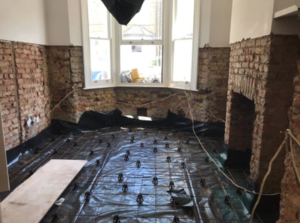
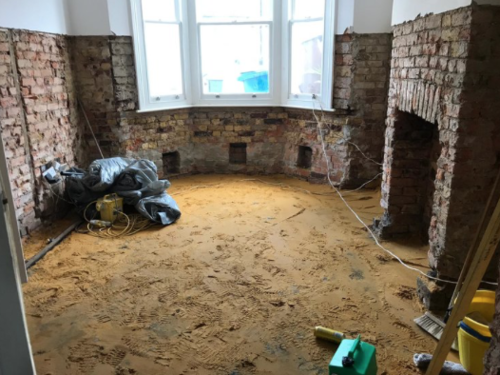
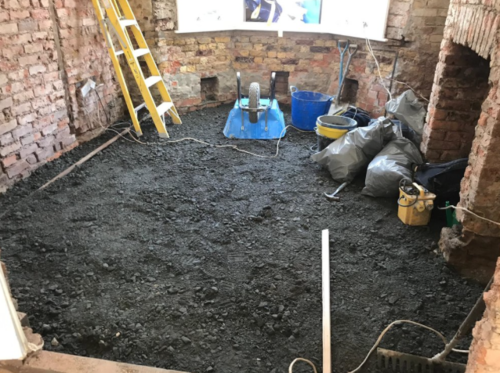
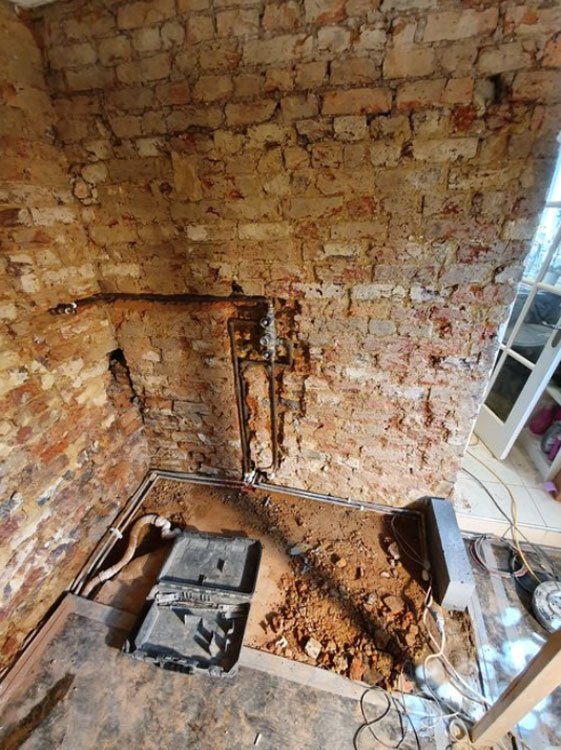
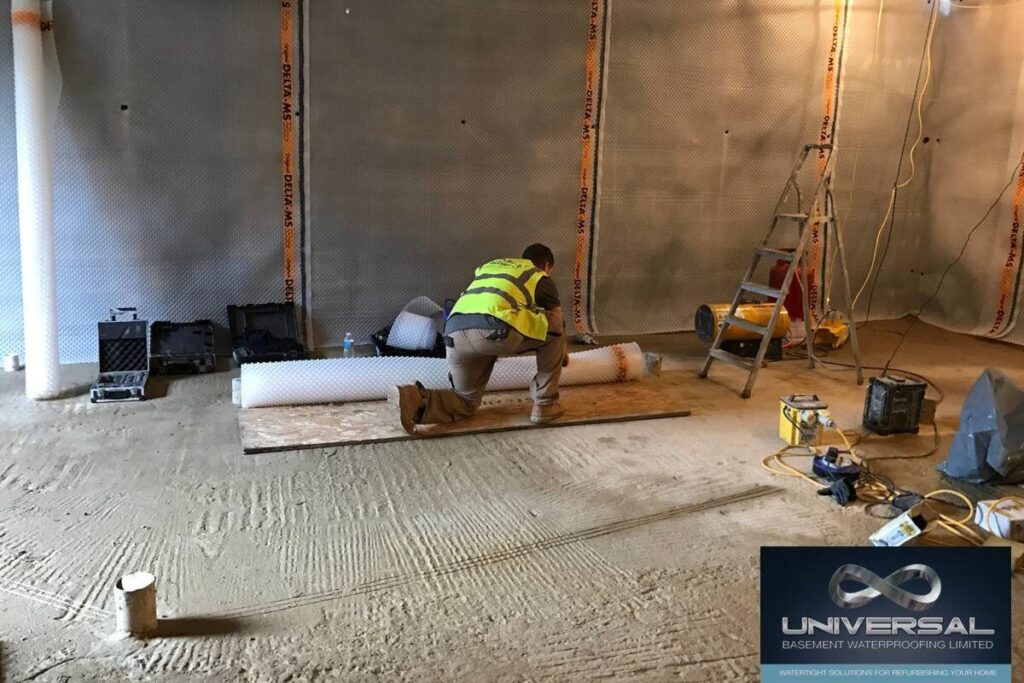
The cost of basement construction depends on several factors, including the size of the basement, the ground conditions, the intended use of the space, and the waterproofing system required. Every project is unique, so we recommend arranging a professional survey, where one of our experienced surveyors can assess your property and provide a detailed, no-obligation quotation tailored to your requirements.
Request a call
Sika Damp Proofing London
Universal Basement Waterproofing is certainly one of the most experienced Damp Proofing Contractors in the UK. One of it’s Surveyors Denis Beech is longest serving Surveyor in the UK with huge experience of every possible damp scenario! Assessing and treating damp to ensure long term protection requires a high level of Technical expertise and experience from a Certificated Surveyor in Remedial Treatment (CSRT) Qualified Surveyor.
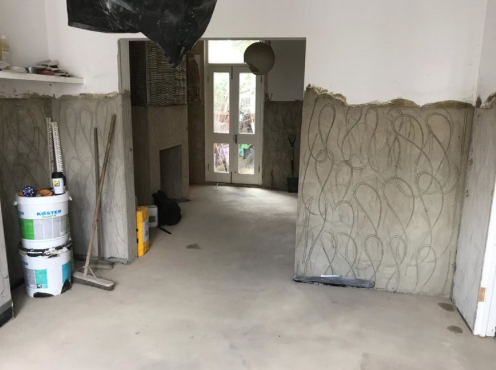
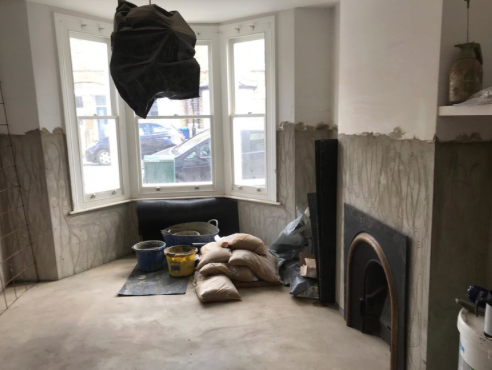
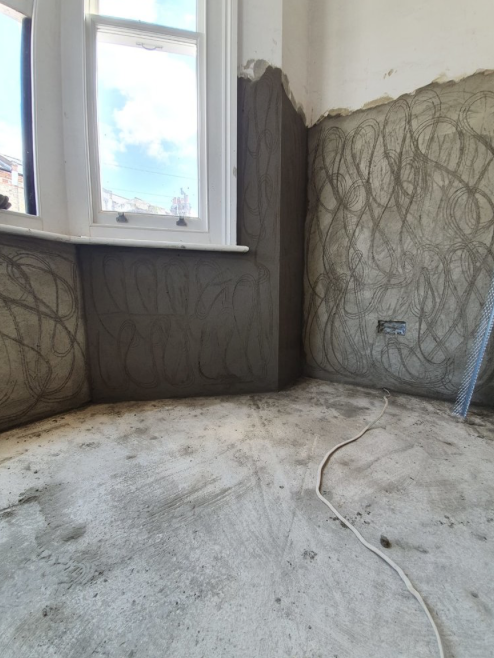
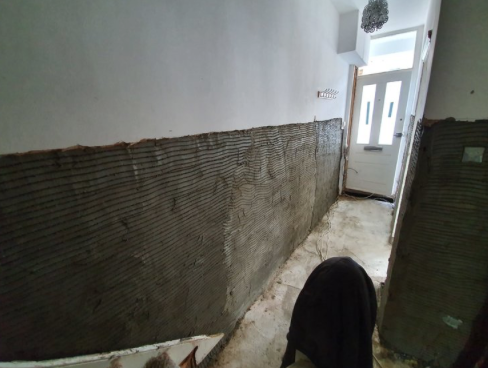
Installing a Two-Part Damp Proofing system is vitally important for protecting the structure of your home against rising dampness.
Universal Basement Waterproofing’s expert team of surveyors are fully trained and Certified installers experienced with in Branded Damp Proofing Products like Sika1, Wycamol, Koster and Delta Membrane.
Universal Basement Waterproofing is fastidious in undertaking a detailed site survey followed by an accurate diagnosis. A site surveyor will generally require one of our surveyors to spend a morning on site carrying out site specific observations, measuring the structure, taking photographs as well as meeting architects or designers to discuss drawings or issues that may have arisen on site.
Our Certified Surveyor in Remedial Treatment (C.S.R.T) Qualified Surveyors have surveyed thousands of Properties over the last 50 years each one bringing its own challenges. From the moment we set foot at the property our surveyor will be carrying out a visual inspection of the area we have been requested to look at as well as having a general walk round the property for any issues that may be of concern with regards to property preservation.
Once the survey has been carried out the report will then be produced. The report generally takes two days to produce after the initial site survey depending on the size of the project. It is t reviewed by our Contracts Manager and Directors and available for issue within 10 days of the visit.
*Some projects may require changes along the way, which are documented when the report is amended before re-issue.
Within this report the surveyors internal and external observations are noted in detail, along with client recommendations, client preparations, photographic references, full detailed scope of work, plus a detailed CAD drawing of the property and proposed Damp Proofing Design.
The importance of each of these sections is described in more detail below.
There will be a standard Survey fee of £495.00+VAT to cover the cost of the visit, creating a design and issuing the detailed comprehensive report.
This detailed photographic report is then retained with the 20-year Damp Proofing Guarantee as a record of what was installed.
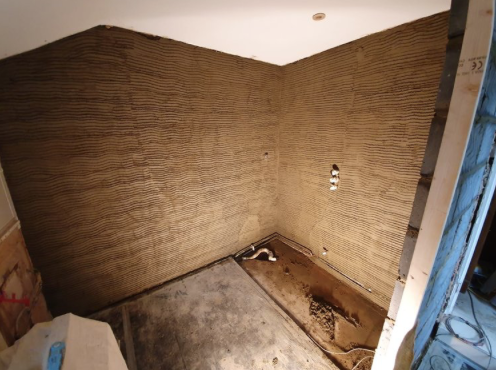
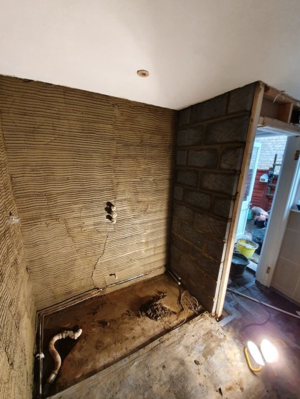
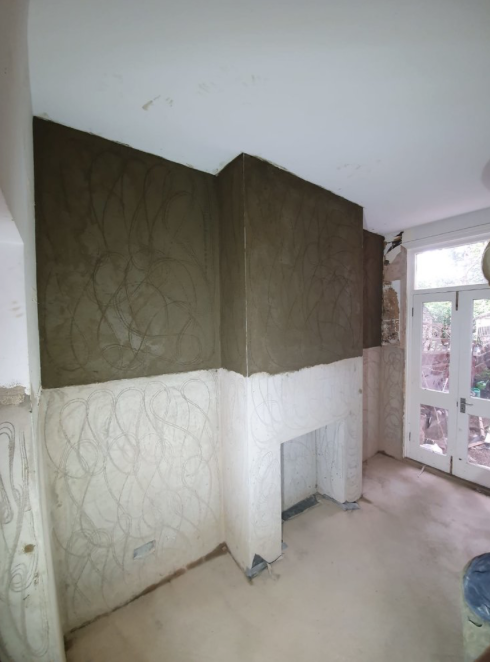
Damp occurs where moisture rises from the ground and where there is no damp-proof barrier it will rise and seep into bricks, mortar and plaster. Overtime, signs of the effects caused by rising damp will start to appear; tide marks on a wall usually to a height of one metre above ground level, bubbling and crumbling plaster and spoiled external brickwork or render.
Penetrating damp is caused most commonly by ongoing building defects which allow water to penetrate a building such as leaking gutters and cracked rendering and defective plumbing. Environmental conditions such as prolonged periods of heavy rain and strong winds can also be a factor.
Our Survey includes an internal and external examination covering the following areas:
-
External rainwater goods, valleys and flat roofs.
-
Condition of brickwork, stone, mortar, plinths, render and weatherproof finish etc.
-
Wall construction, cracks in masonry, copings etc.
-
External timbers including windows and doors.
-
Air vents, their position and condition.
-
Chimneys and flashings.
-
Position of any remedial damp proof course installation including spacing.
-
High ground levels, abutting garden walls, steps and position and integrity of any Damp Proof course system.
Primary internal Examination
-
Fungal decay in skirting boards and/or other timbers.
-
Peeling/blistering wallpaper or paintwork.
-
Efflorescence.
-
Mould growth, staining.
-
Damp/wet patches, water droplets, run marks.
Secondary internal Examination
-
Examine both perimeter and centre of solid-timber suspended floors.
-
Check moisture content of timber skirting, top and base.
-
Examine and check condition of the floor-wall junction, edge of DPM of floor.
-
Check any remedial damp‐proof course installation including position and depth of holes if inserted from inside.
-
Note distribution of moisture meter readings both vertically and horizontally on the surface of walls.
-
Check for efflorescence beneath wallpaper finishes.
-
Note any use of polystyrene sheet- foil backing beneath wallpaper.
-
Note any new plasterwork, height of replastering, its condition and if possible, its type, e.g. renovating, sand- cement, lightweight premix gypsum.
-
Lift floorboards and thoroughly examine timbers and subsite.
-
Check for suitable subfloor ventilation.
-
Look for internal plumbing defects and water dripping from cold pipes as the result of condensation.
-
Evaluate lifestyle, i.e. use of central heating, paraffin or flueless gas heaters, drying, washing and cooking, degree of ventilation.
Eliminating the primary source of damp in your building
The primary task of our surveyor is to correctly identify the source of dampness. This is best achieved by a process of investigation and elimination. Care must be taken, for example, in the winter months to eliminate condensation as one of the potential causes of dampness.
Any client recommendations and preparation work that we feel may help during the project to aid with installation and maintenance of a successful waterproofing system. To carry out successful installation/application of damp proofing work there will sometimes be some preparation work that needs to be carried out, by the client prior to our arrival. This will be listed in this section of the report. Examples of this are; Provide access to all areas requiring remedial work, removal of furniture, carpets and stored items, provide parking water and welfare facilities. Recommendations will also be included if any defects are identified during the internal-external observations which may affect the fabric of the property.
A full schedule of works detailing each stage of the waterproofing project and any materials/products which are being used during installation-application. In this section of the report each item of work is thoroughly detailed for the client, so they are aware of what work is included and how each stage is carried out. This as well as including all materials we will be proposing to use.
Photographic reference highlighting items which were noted during observations. During the survey our surveyor will highlight areas of concern which will be documented within the observation section of the report. These areas will then be photographed and included here. Each photograph will have a brief written description of the observation included next to each picture. Plus, a note stating in which area of the CAD drawing the photograph refers to e.g. Area A
A detailed CAD drawing highlighting the proposed schedule of works. A detailed CAD drawing is included which lists all the proposed work documented in the schedule of works section of the report. The CAD drawing highlights areas of concern as well as clearly showing the areas where the specified damp proofing systems are being installed.
A full quotation breaking down the costs. The scope of work, CAD drawing and quotation are all cross referenced so everything that has been proposed is broken down and costed at the end of the report. This is laid out clearly so the client can see the costs, enabling them to plan accordingly.
Condensation and Ventilation
Condensation damp can be a health hazard especially to those who already have respiratory health problems. It is important to provide increased and regular levels of ventilation to facilitate regular air changes within a room. If this cannot be achieved naturally by opening windows frequently etc, then some form of mechanical ventilation control should be introduced.
The build-up of excess moisture within a building can lead to damp walls which can eventually result in various problems. If you notice signs of damp on walls within your property, then we strongly advise you to act fast to resolve the issue. Damp on internal walls is unsightly, unhealthy and is the primary cause of wood decay in a building, which can put your property at risk of structural damage.
There are many ways in which rising damp may be found in a property. Rising damp may be found during a Building Survey, by tests carried out to the base of the damp walls, however, in more severe cases where damp has been left untreated for prolonged periods of time, visible damp patches may appear, along with hygroscopic salts on the surface of the walls.
Air molecules are larger when they’re warm and so they can hold more atmospheric moisture. When the air cools the molecules reduce in size and so are unable to hold the same amount of moisture, and therefore deposit the excess moisture on the surrounding surfaces. Visually this can appear as actual moisture and wet to the touch, or as black spot mould. Both can have detrimental effects to the internal finishes and the spores of the mould can manifest themselves on the wall plaster or other surfaces.
Book Your Basement Survey Now
One of our waterproofing specialists will inspect your basement, discuss the most suitable waterproofing system and provide expert recommendations with no obligation.
Case Studies
Ready to Transform Your Basement?
Whether you’re planning a new basement or need to stop persistent damp and water ingress, our experienced surveyors can recommend the right waterproofing solution.
✔ Professional Survey
✔ Fully Guaranteed Work
✔ 50+ Years Experience
Frequently Asked Questions
In many cases, basement waterproofing alone does not require planning permission. However, basement construction, excavation, or significant structural alterations may require planning approval and Building Regulations compliance, particularly in certain London boroughs or conservation areas. We can advise you during your survey and help you understand any permissions your project may require.
The duration of a basement waterproofing project depends on the size and complexity of the work. Smaller waterproofing installations can often be completed within a few days, while larger basement construction or full structural waterproofing projects may take several weeks. Following your survey, we’ll provide a clear project schedule so you know exactly what to expect.
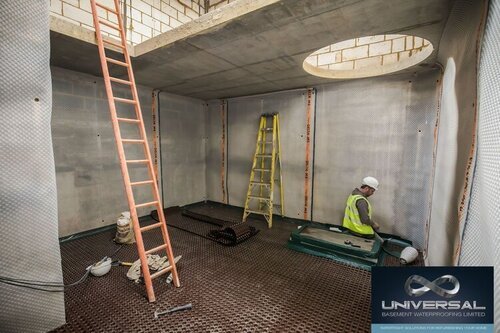
There is no single waterproofing system that is suitable for every property. The most effective solution depends on factors such as the construction of the building, ground conditions, water ingress risk, and how you intend to use the basement. Our experienced surveyors will assess your property and recommend the most appropriate BS8102-compliant waterproofing system, whether that’s a Type A (barrier protection), Type C (cavity drain membrane), or a combined system for maximum protection. We only install proven products from leading manufacturers, including Delta, KÖSTER, and Sika.
Yes. We install high-quality waterproofing systems from leading manufacturers such as Delta, KÖSTER, and Sika, following BS8102 standards for below-ground waterproofing. Our waterproofing systems are fully guaranteed, giving you confidence that your basement will remain dry and protected for years to come. We’ll explain the guarantees available during your survey.
We provide basement construction and structural waterproofing services throughout London, Kent, Surrey, Essex, Sussex, and the surrounding areas. If you’re unsure whether we cover your location, simply get in touch and our team will be happy to help.
Yes. We regularly waterproof existing basements, cellars, and vaults, whether they’re affected by damp, water ingress, or you’re planning to convert the space into a dry, usable room. Every property is different, so we carry out a professional survey to identify the cause of the problem before recommending the most suitable waterproofing solution. Our systems are designed to provide long-term protection while complying with BS8102 standards for below-ground structures.
With over 50 years of experience, Universal Basement Waterproofing has designed and installed waterproofing systems for properties across London and the South East. Our experienced surveyors design BS8102-compliant waterproofing solutions using trusted systems from Delta, KÖSTER, and Sika. From initial survey through to installation, we focus on delivering long-lasting, fully guaranteed waterproofing solutions tailored to every property.
We aim to arrange surveys as quickly as possible, subject to availability. During your survey, one of our experienced waterproofing specialists will assess your basement, discuss your requirements, identify any issues with damp or water ingress, and recommend the most suitable waterproofing solution. You’ll then receive a detailed, no-obligation quotation for the work required.